How One Simple Filter Affects Comfort, Efficiency, and the Air You Breathe
When homeowners ask us about improving the air inside their homes, they’re often surprised by where we start. Not with air duct cleaning. Not with expensive air purification systems. Not with the furnace itself.
We start with the furnace filter.
It’s one of the smallest and least expensive components in your HVAC system, yet it plays one of the biggest roles in protecting your home’s air quality, your heating and cooling equipment, and even your monthly energy bills. Like many parts of your home, it’s easy to forget about until something goes wrong. But understanding how your furnace filter works, and choosing the right one, can make a noticeable difference in the comfort of your home.
Your Filter Does More Than Catch Dust
Many people think a furnace filter exists simply to keep dust out of the air. While that’s partially true, its primary job is actually to protect your HVAC system. Every time your furnace or air conditioner runs, air circulates through the filter before passing through sensitive components like the blower motor and evaporator coil. Without a filter, dust, pet hair, lint, pollen, and other airborne particles would quickly accumulate inside the equipment.
Over time, that buildup can reduce efficiency, restrict airflow, and place additional strain on the system. A clean filter helps keep air moving the way it was designed to, while also capturing many of the particles that would otherwise continue circulating throughout your home.
Why does it matter? Your furnace filter isn’t just protecting the air you breathe. It’s protecting one of the largest investments in your home.
Not All Filters Are Created Equal
Walk down the filter aisle at any home improvement store, and you’ll find dozens of options. Some cost only a few dollars. Others promise hospital-grade filtration, allergy relief, or maximum protection. It’s natural to assume the most expensive filter must be the best choice. In reality, that’s not always true.
Every HVAC system is designed to move a certain amount of air. Some high-efficiency filters remove smaller particles, but they can also create more resistance to airflow. If your system isn’t designed for that level of filtration, a filter that’s too restrictive may reduce airflow and force the equipment to work harder. The best filter is the one that balances effective filtration with your system’s airflow requirements. If you’re unsure which filter is appropriate, your HVAC manufacturer’s recommendations are an excellent place to start.
Life on the High Plains
Living in Southeast Wyoming and Northern Colorado brings unique challenges. We experience strong winds, fine dust, seasonal pollen, wildfire smoke, agricultural activity, and construction dust. All of those conditions increase the amount of airborne particles your HVAC system must handle. Add children, pets, hobbies, or frequent visitors, and your filter may collect debris much faster than you expect.
That’s one reason we encourage homeowners to check their filters regularly rather than relying solely on a calendar. The conditions outside your home directly affect the air inside it, and your furnace filter is one of the first places those changes become visible.
How Often Should You Change Your Filter?
This is another question without a one-size-fits-all answer. A household with two dogs, several children, and an active lifestyle will likely need more frequent filter changes than a retired couple with no pets. The type of filter, how often your HVAC system runs, and local conditions all influence how quickly it becomes loaded with dust and debris.
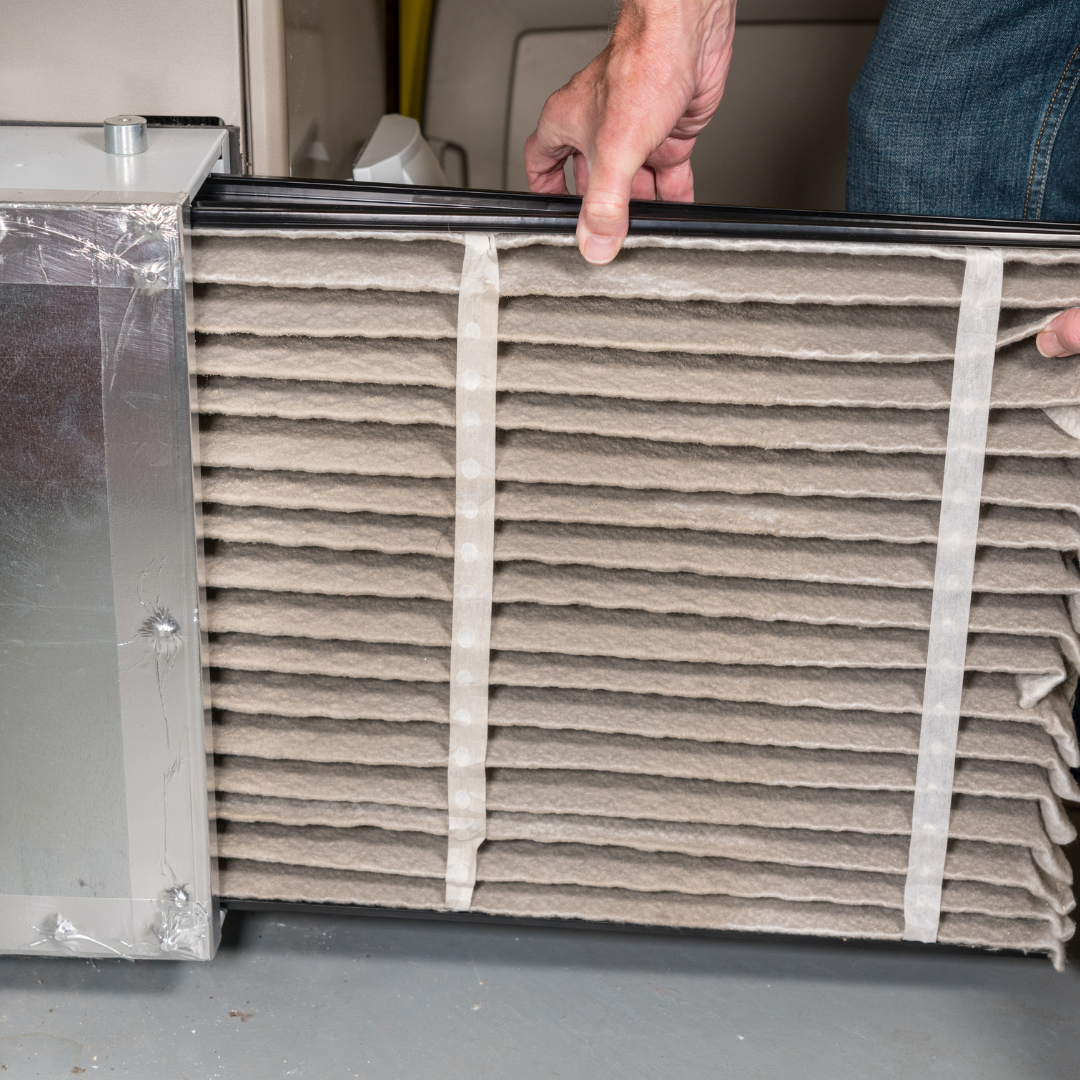
Instead of asking, “Has it been three months?” a better question is: “What does my filter look like today?” Checking your filter once a month only takes a minute and gives you a much better picture of how your home is affecting your HVAC system.
Signs Your Filter May Need Attention:
- The filter appears visibly dirty.
- Airflow from your registers seems weaker than usual.
- Your home seems dustier than normal.
- Allergy symptoms appear worse indoors.
- Your furnace or air conditioner seems to run longer than it used to.
The Filter is Only One Piece of the Puzzle
A clean filter is an important part of a healthy HVAC system, but it isn’t the entire solution. Indoor air quality is influenced by many factors, including housekeeping habits, ventilation, humidity, outdoor air conditions, pets, remodeling projects, cooking, candles and fireplaces, and the condition of your HVAC system. That’s why improving indoor air quality is rarely about finding one magic solution. It’s about understanding how all the pieces work together.
Your Healthy Home Takeaway
Don’t wait until your furnace stops working to think about the filter. Take a minute once a month to check it. Replace it when it needs attention. Choose a filter that’s appropriate for your HVAC system. Healthy homes aren’t built through small, consistent habits that protect your home over time.
Before You Move On:
- Check your furnace filter today.
- Write the installation date on the edge of the new filter.
- Pay attention to seasonal changes.
Every home is different because every family is different. The more you understand your own home, the better decisions you’ll make for years to come.