Every Breath Has a Story
It usually starts with a question most homeowners have asked at least once.
“Where does all this dust keep coming from?”
You dust the furniture on Saturday. By the middle of the week, there’s already another thin layer covering the coffee table. You change your furnace filter, vacuum regularly, and keep a tidy home, yet the dust always seems to find its way back.
If you live in Southeast Wyoming or Northern Colorado, you’re probably even more familiar with the challenge. Between our famous winds, dry climate, and long heating season, keeping dust under control can feel like a never-ending chore. It’s natural to wonder if your air ducts are to blame.
After all, your heating and cooling system moves air through your home every day. If air is constantly traveling through those hidden passageways, what exactly is moving with it? The answer might surprise you. Some of what’s inside your ductwork is not a big deal. Some materials may deserve a closer look. And many of the things homeowners worry about are often misunderstood.
In this guide, we’ll take a closer look at what commonly finds its way into residential air ducts, why it happens, and how understanding your home’s airflow can help you make informed decisions about your indoor environment.
Because when you understand what’s normal—and what isn’t—you can replace guesswork with confidence.
Your HVAC System Is Your Home’s Circulatory System
Most of us don’t spend much time thinking about our heating and cooling system until something stops working. We adjust the thermostat, replace the furnace filter once in a while, and expect comfortable air to show up when we need it.
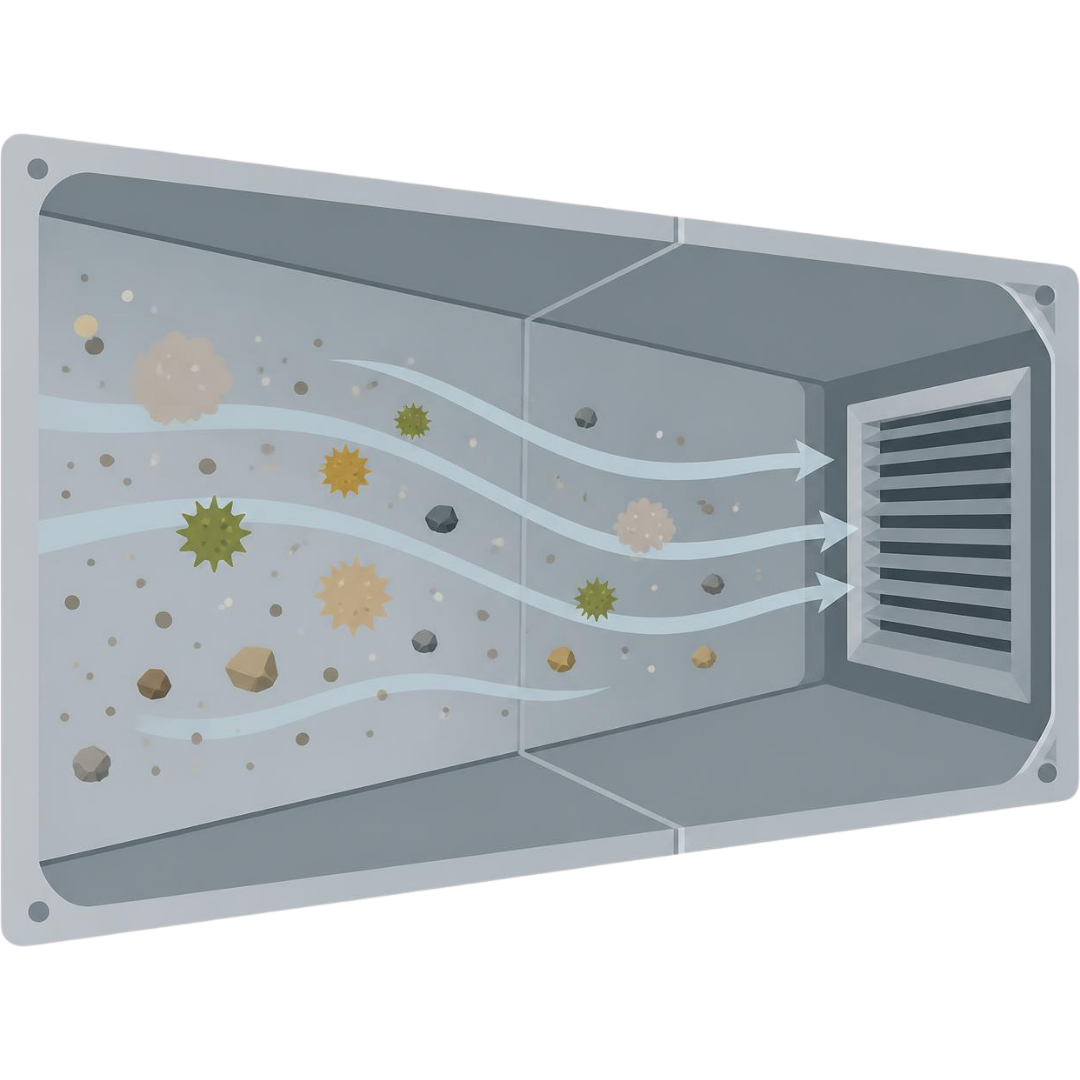
Behind the scenes, though, your HVAC system is doing much more than heating or cooling your home. It’s constantly moving air. One of the easiest ways to picture it is to think of your HVAC system as your home’s circulatory system. Supply ducts deliver conditioned air into each room. Return ducts pull that air back to the furnace or air handler, where it passes through a filter before beginning the journey again.
The air inside your home may circulate many times throughout the day. Along the way, it carries tiny everyday particles such as dust, fibers, pet hair, pollen, and microscopic skin cells.
Your furnace filter captures many of these particles, but no filter catches everything—and that’s normal. Filters balance air cleaning with proper airflow. The goal isn’t perfectly sterile air. It’s maintaining a comfortable, healthy home while allowing your HVAC system to operate efficiently. Understanding how air moves makes it much easier to understand what ends up inside your ductwork.
The Everyday Things That Find Their Way Into Your Air Ducts
Most of what ends up inside residential ductwork comes from everyday life. People, pets, clothing, carpet, outdoor air, and normal household activity all contribute tiny airborne particles. Common materials include household dust, pet hair and dander, carpet and fabric fibers, pollen, outdoor dust, and small amounts of insect debris. None of these materials is unusual by itself. They’re simply part of living in a home. The amount that accumulates depends on the home’s age, occupants, pets, filtration, and where you live. On the High Plains, our environment plays an especially important role.
Why We Have More Dust on the High Plains
Homeowners throughout Southeast Wyoming and Northern Colorado face a unique challenge: the wind.
Fine soil and dust are constantly moving outdoors and naturally make their way indoors whenever doors open and people come and go. Our dry climate allows fine particles to stay airborne longer, while our long heating season means indoor air circulates through HVAC systems for months at a time. Construction, agriculture, gravel roads, and open land can all contribute additional fine dust.
None of this means your home is dirty. It simply means dust is part of life on the High Plains.
What Doesn’t Belong in Your Air Ducts
While everyday dust is expected, some conditions deserve attention. These include water or moisture intrusion, evidence of rodents or animals, heavy construction debris, excessive soot or smoke residue, suspected mold associated with moisture, and noticeable airflow changes or debris blowing from registers.
Look for patterns rather than perfection. A little dust is normal. Significant changes are worth investigating.
Do DIrty Air Ducts Make you SIck?
The honest answer is: it depends.
Indoor air quality is influenced by many factors, including filtration, ventilation, humidity, housekeeping, pets, cooking, fireplaces, remodeling projects, and routine HVAC maintenance. Air ducts are one important part of that larger picture—but they’re only one part.
Airborne particles such as pollen, pet dander, dust, and other allergens can contribute to discomfort for people with allergies, asthma, or other respiratory sensitivities. Finding dust inside your ductwork, however, does not automatically mean your home’s air is unhealthy or that your ductwork is the primary cause of those symptoms.
Rather than searching for one single cause, it’s more helpful to understand how your home’s systems work together to influence the air your family breathes every day. That’s why we encourage homeowners to look at the whole home, not just one component.
Simple Ways to Reduce What Circulates Through Your Home
Replace furnace filters regularly, keep return vents unobstructed, vacuum and dust consistently, reduce construction dust during remodeling, address moisture promptly, and maintain your HVAC system. Progress—not perfection—is the goal.
When Is It Worth Looking Inside Your Air Ducts?
It may be worthwhile to take a closer look after a remodeling project, when moving into an existing home, following water or fire damage, if you suspect pest activity, or whenever something about your HVAC system changes unexpectedly. You may also notice that you’re dusting furniture more often than you used to, changing your furnace filter more frequently, or seeing more dust collect around your supply registers. While these signs don’t automatically mean your air ducts need cleaning, they may indicate that it’s time for a closer evaluation.
Curiosity is better than assumption. Understanding your home—and paying attention when something changes—helps you make informed decisions.
A Better Understanding of the Air You Breathe
Every home collects dust. Every HVAC system moves air. The goal isn’t to eliminate every speck of dust but to understand what’s normal and recognize when something changes. Change filters regularly, maintain your HVAC system, address moisture promptly, and don’t let fear make decisions for you.
The more you understand how your home works, the more confident you’ll become in caring for it.